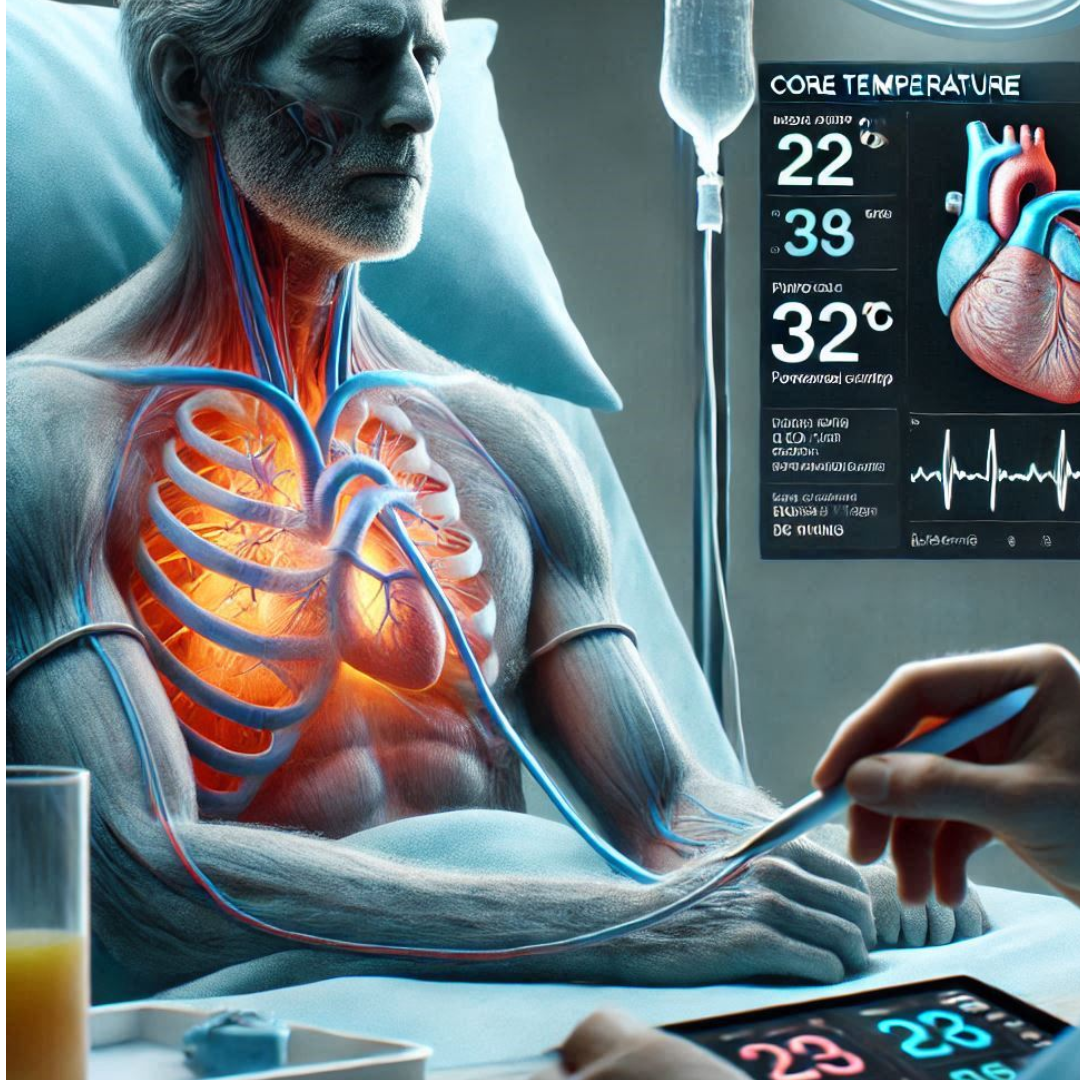
Why Core Body Temperature is Such an Important Vital Sign

Core temperature is a vital sign that holds immense significance in healthcare, representing a key marker of physiological status and homeostatic balance.

Why Core Body Temperature is Such an Important Vital Sign

Vital signs are critical indicators of health and physiological function, serving as essential tools in clinical assessments and healthcare monitoring. Among these vital signs—heart rate, respiratory rate, blood pressure, and oxygen saturation—core body temperature holds a unique and pivotal role. Let’s explore the importance of core temperature as a vital sign, its physiological implications, the … Read more

cms access

RE.DOCTOR Vitals and CMS ACCESS: Revolutionizing Remote Patient Monitoring

The CMS ACCESS program and play.re.doctor/ Vitals are two cutting-edge forces that are coming together to change patient care as the healthcare industry rapidly changes.  For Medicare beneficiaries nationwide, this collaboration marks a major advancement in the availability and affordability of high-quality healthcare. What is the CMS ACCESS Program? The CMS ACCESS (Accelerating Care Coordination through Episode-based … Read more

HRV measures the variation in time between each heartbeat (in milliseconds). A healthy heart is not like a metronome; it speeds up slightly when you inhale and slows down when you exhale.

What is the Early Warning Scale: Heart Rate Variability (HRV)

The “Early Warning Scale” you are referring to is Heart Rate Variability (HRV) itself. Unlike the Ewing system, which rates neuropathy in distinct stages (Normal, Early, Definite, Severe), HRV is a continuous physiological measurement. It is considered an “early warning” system because it can detect subclinical nerve damage (specifically to the vagus nerve) long before … Read more

How accurate are patient-reported vital signs compared to clinical measurements

How Accurate are Patient-Reported Vital Signs

Patient-reported vital signs tend to be less accurate and reliable compared to clinical measurements taken by healthcare professionals using standardized equipment and protocols. Key points from recent studies and reviews include: Vital signs (such as blood pressure, heart rate, respiratory rate, and temperature) recorded by patients or less experienced personnel often show variability, rounding, or … Read more

Revolutionizing Personal Health: RE.DOCTOR - The Future of Wearable Medical Technology

Revolutionizing Personal Health: RE.DOCTOR – The Future of Wearable Medical Technology

In the world of digital health technology, one groundbreaking innovation stands out as a true game-changer: RE.DOCTOR. This extraordinary platform is set to transform the humble smart watch from a simple fitness tracker into a powerful, personal health comprehensive medical diagnostic tool that could revolutionize personal healthcare as we know it! Imagine wearing a device … Read more

Tuberculosis (TB) is a disease that continues to impact public health across the globe.

How TB Affects Us Today

Tuberculosis (TB) is a disease that continues to impact public health across the globe, despite common misconceptions that it is a relic of the past. Caused by the bacterium Mycobacterium tuberculosis, TB primarily targets the lungs, although it can affect any part of the body, including the kidneys, spine, and brain. Understanding TB’s current status, its … Read more

Using RE.DOCTOR PPG Vitals for AFib Screening

Using RE.DOCTOR PPG Vitals for AFib Screening

Using RE.DOCTOR PPG Vitals for AFib Screening Atrial fibrillation (AFib) is a common cardiac arrhythmia that significantly increases the risk of stroke and other cardiovascular complications. Early detection is crucial, and recent advancements in technology have made it possible to screen for AFib using smartphone applications that utilize photoplethysmography (PPG). One such application is RE.DOCTOR … Read more